

Why 81% of Enterprise AI Initiatives Run Into the Same Wall

Updated on
Published on
By

Table of Content
About the author

AI has a tendency to move fast and forget what it was built on.
Every few months, a new capability becomes the center of attention. Models get bigger, outputs get more impressive, and the industry moves one step further away from the fundamentals that made any of this possible in the first place. It creates a strange imbalance where progress is visible everywhere, but clarity is harder to find.
This tension surfaced clearly in Neysa’s conversation with Praveen Pankajakshan.
What makes his perspective stand out is not just the range of problems he has worked on, from healthcare to energy to agriculture, but the consistency in how he approaches them.
Across domains, the thinking remains the same. Start with first principles. Build systems, not shortcuts. And most importantly, ensure that what you build can hold up in the real world.
A lot of modern AI conversation is centered around outputs. What can a model generate, how fast can it respond, and how realistic does it feel? But underneath all of that, there is a layer that often gets overlooked.
Most of what we call AI today is still built on ideas that come from signal processing, mathematics, and structured reasoning. These are not new concepts. They are the foundation on which newer systems are layered.
The problem is that as tools become easier to use, the need to understand those foundations seems to disappear. Systems are assembled quickly, models are plugged into workflows, and results are expected almost immediately.
But when something breaks, and it eventually does, the absence of first principles becomes visible. It becomes harder to diagnose what went wrong, harder to fix it, and even harder to trust the system again. And so, it’s a systems problem.
One of the most important ideas Praveen brings up is something that sounds almost basic but is becoming increasingly difficult to guarantee: reproducibility.
At its core, science depends on the idea that if you run the same experiment under the same conditions, you should get the same result. That is what allows knowledge to build over time. That is what allows systems to be trusted.
But modern AI systems, especially generative ones, don’t always behave this way.
Give the same input multiple times, and you can get different outputs. At a surface level, this feels like flexibility. But at a deeper level, it raises a more serious question. If the same system cannot produce consistent results, how do you validate it?
The issue becomes even more subtle when you look at how these systems are actually computed. Small approximations, rounding errors, and differences in compute environments can compound over time. The same model, trained on the same data, can behave differently depending on where and how it is run.
At a small scale, this might go unnoticed. At production scale, it becomes a real problem.
There is a tendency to think of AI systems as a combination of data and models. But what often gets missed is the role of compute itself.
How a model is executed, how operations are ordered, and how calculations are approximated all influence the final output. In some cases, two identical systems running on different infrastructures can produce different results.
This shifts the conversation in an important way. Expectations with AI today have upped from just building better models. Today, AI is about building systems where every layer, from computation to orchestration, behaves predictably.
This is where infrastructure begins to become inseparable from intelligence. Because if the underlying system introduces variability, no amount of model improvement can fully compensate for it.
While most of the world is focused on AI in the cloud, another shift is quietly taking shape. Moving intelligence into the physical world.
At Urban Kissan, this takes the form of building autonomous systems that operate directly within farming environments. Not just analyzing data, but interacting with it. This includes vision systems that observe crops, decision systems that interpret conditions, and physical systems that act on those decisions. Together, they form what can be thought of as the “body” of AI, not just the brain.
What makes this direction important is that it forces AI to deal with reality. Real environments are noisy, unpredictable, and constrained. Systems cannot rely on perfect inputs or controlled conditions. They have to adapt continuously.
And when AI moves into these environments, the gap between what works in a demo and what works in production becomes impossible to ignore.
Another theme that runs through the conversation is sovereignty. Not as a buzzword, but as a practical requirement.
For a long time, many AI systems have relied on datasets, models, and infrastructure built elsewhere. This works up to a point. But as soon as you try to apply those systems to local contexts, limitations start to show.
In agriculture, for example, models trained on large, uniform farms struggle to adapt to fragmented landholdings. Recommendations that make sense in one region fail in another because they ignore cultural, economic, or environmental realities.
This is where sovereign AI becomes important. To own models and to own the entire stack. Data, infrastructure, deployment, and feedback loops.
Without that control, systems remain dependent. And dependent systems struggle to adapt.
One of the more practical ideas discussed is the concept of a unified operating layer for agriculture.
Today, most solutions are fragmented. Farmers interact with multiple tools, each solving a small part of the problem. One for advisory, one for purchasing inputs, one for monitoring crops, and so on. This creates complexity across usage and in decision-making.
The idea behind something like a “farm OS” is to bring all of these layers together into a single system. From soil preparation to harvesting to market linkage, everything exists within one coherent framework. This is a systems decision. Because intelligence becomes significantly more useful when it is not fragmented across disconnected tools.
What ties all of these threads together is the need for infrastructure that can support this level of complexity. Systems that deal with real-world data, physical environments, and continuous feedback loops cannot rely on generic infrastructure. They need environments that are designed for AI workloads from the ground up.
This is where Neysa’s role becomes foundational.
By enabling AI-native infrastructure that supports high-performance compute, predictable behavior, and localized deployment, Neysa allows systems like these to function reliably. It provides the stability required for experimentation, the flexibility required for iteration, and the control required for sovereignty.
More importantly, it ensures that infrastructure does not become the limiting factor as systems evolve. Because when AI moves from demos to real-world systems, infrastructure becomes less invisible. It becomes critical.
For all the discussion around systems and infrastructure, one of the most grounded parts of the conversation is about people. Building AI only begins at building great technical capability. The real test is measured in how much the teams are equipped, whether teams are structured or not, how individuals think, and how learning happens over time.
Different stages of building require different kinds of people. Some thrive in deep research, working through first principles. Others are better at rapid iteration, scaling systems, and moving quickly from idea to deployment.
The challenge is not choosing one over the other. It is creating a system that allows both to coexist. And more importantly, creating an environment where learning is continuous. Because in a field that changes this quickly, static expertise becomes obsolete very fast.
Perhaps the most powerful idea from the conversation comes through a simple analogy.
Training and deploying AI is like surfing. You can ride waves, experiment, and push boundaries. But you are always connected to your board through a tether. That tether is what brings you back.
In AI, that tether is grounding. It is first principles, real-world feedback, and systems that keep behavior aligned with reality. Without it, systems can drift, producing outputs that look convincing but are detached from truth.
Right now, much of AI is being built without that tether. And that is where the risk lies.
The industry has become exceptionally good at building models that impress. But building systems that endure requires a different mindset. One that values consistency over novelty, grounding over abstraction, and systems over shortcuts.
What this conversation makes clear is that the future of AI will be defined by how well the models are integrated into systems that can operate in the real world.
That is the layer Neysa is designed to support. Because in the end true intelligence exposes what systems can do. Shows how the systems can do it reliably, repeatedly, and in a way that stays connect to reality.
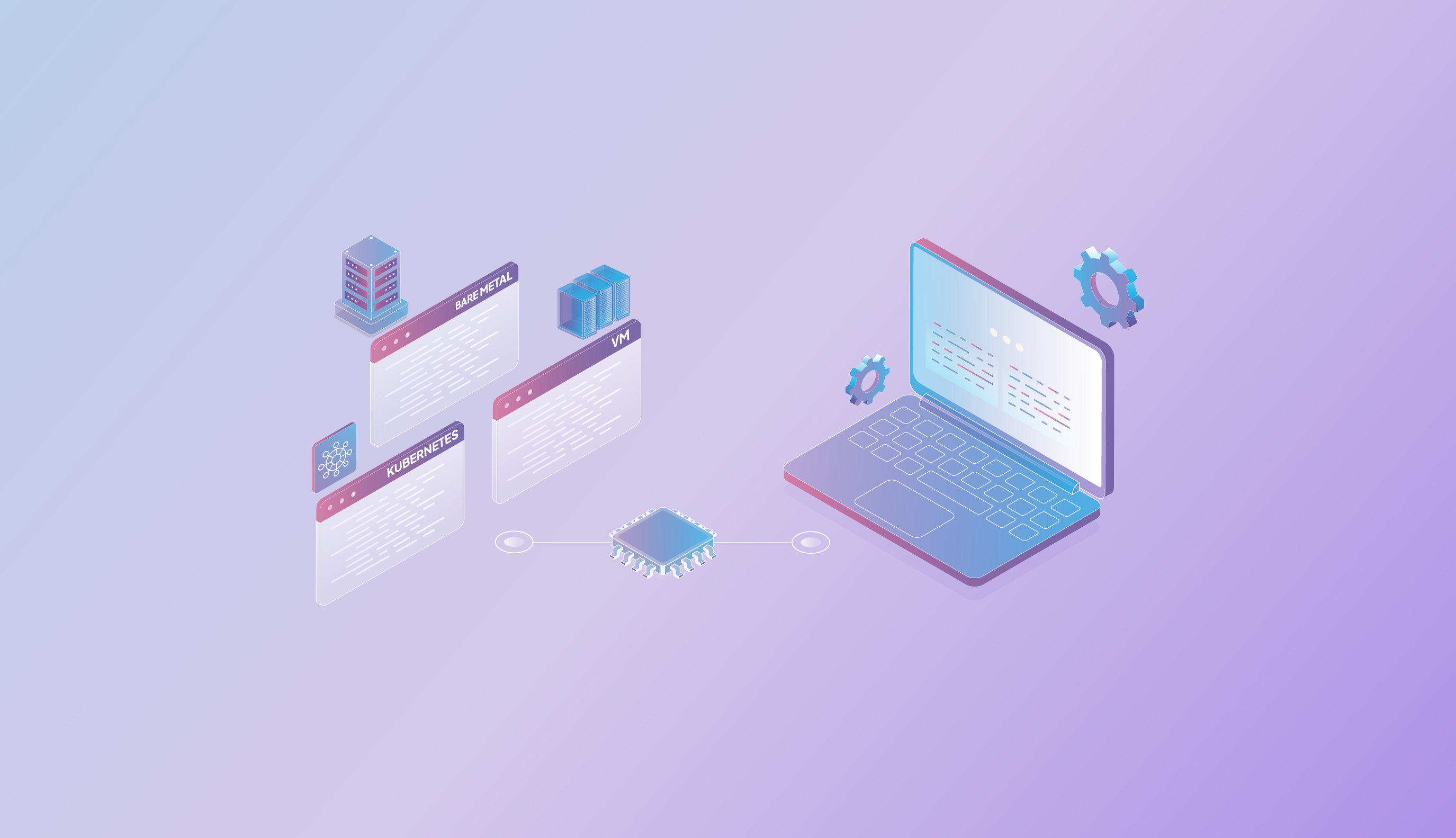
Choosing between GPU VMs, bare metal, BMaaS, and Kubernetes starts with understanding your workload. This practical guide explains how training, inference, GPU utilization, latency, isolation, and scale determine the right AI infrastructure and why Kubernetes is a separate orchestration decision rather than another type of machine.

MCP (Model Context Protocol) is an open standard designed to enhance enterprise AI by simplifying integration through a hub-and-spoke architecture, reducing the need for multiple point-to-point connections. It addresses challenges in AI deployments by ensuring robust logging, distinct layer responsibilities, and optimized infrastructure for complex workflows, enabling easier adjustments and improved performance.

The article discusses the complexities of deploying large language models in production, emphasizing the importance of inference infrastructure, efficiency in request handling, and the role of vLLM inference servers in managing workloads effectively.


 Back to blog home