

Why 81% of Enterprise AI Initiatives Run Into the Same Wall


Table of Content
About the author

Getting a model to work in a lab is a solved problem. Getting it to work in production, reliably, across multiple teams – that’s a completely different story. Most enterprises learn this the hard way.
Once AI is LIVE in a customer app or internal workflow, the questions shift fast.
‘Why is latency spiking on Tuesday afternoons?’
‘Which team’s usage is driving this cost jump?’
‘Why is the model behaving differently under load than it did in testing?’
‘Can another model be added without touching the existing setup?’
These are infrastructure problems often misunderstood as model issues.
And they’re the ones that decide whether AI delivers value or just consumes budget.
Inference is the stage where a trained model takes a real input and returns a real output. Simple enough in theory. In practice, production inference is where AI systems accumulate complexity faster than most teams expect.
Scale changes everything. A model handling a thousand requests a day behaves very differently when that number climbs to a million. Traffic routing, GPU allocation, throughput optimization, latency guarantees – all become active concerns. Add multiple models serving different applications, and the complexity multiplies. Different workloads compete for resources, new versions get tested alongside production deployments, and cost attribution gets harder to trace as token consumption grows across teams and products.
Teams that navigate this well usually stopped thinking about inference as a single step early on. They started treating it as a system. GPU compute, model serving, orchestration, observability, security, and cost management all need to work together. When they don’t, the gaps show up at the worst possible times.
A lot of enterprises arrive at platform thinking after living through fragmentation first.
The early logic usually makes sense – you pick a serving framework, bolt on monitoring six months later when someone asks for dashboards, manage security through a separate system because that’s how the security team works, and pull cost data from wherever finance can see it. Nobody made a bad decision. They just made a lot of separate ones, and the gaps between them are where things get messy.
Innoviti ran into this directly. India’s largest offline payment network – processing over ₹80,000 crore annually for 50,000+ merchants including Reliance Retail, Shoppers Stop, and DMart – built a multimodal AI system to automate field verification for their PoS terminal network. It analyzes photos, diagnostic logs, and handwritten job sheets in real time, across 7,000+ tickets a day.
They started on a general-purpose cloud API. The early experiments worked fine. But moving to production didn’t. The shared environment gave them no root access to the serving stack, so latency spikes were impossible to diagnose. Variable token pricing made cost per ticket climb as volume scaled – exactly the wrong direction for an automation play. And they couldn’t fine-tune the model or inspect its decision-making, which matters a great deal when you’re verifying payment hardware for enterprise retailers.
As Girish Varadarajan, Chief Data and AI Officer at Innoviti, put it: “You cannot run a real-time service operations setup on infrastructure you cannot see.”
That’s the black box problem. Not that any individual tool fails – it’s that the AI system eventually outgrows the collection of tools supporting it, and the gaps between systems become the places where things quietly break.
Catch Girish Varadarajan, Chief Data and AI Officer, Innoviti, in a conversation with Neysa at the India AI Impact Summit – below:
An end-to-end inference platform is a single environment where every layer of the stack works together – from compute to serving to observability to security – without teams having to stitch it manually at each stage of growth.
TIFIN, a global fintech AI platform serving India’s largest mutual funds and wealth management firms, needed all of these layers working cohesively. Their commercial model depended on running AI at scale efficiently. Regulatory requirements under SEBI, RBI, and the DPDP Act meant data sovereignty was a hard constraint, not a preference. And their previous infrastructure provider couldn’t deliver the reliability their production workloads demanded.
On Neysa Velocis, TIFIN cut GPU cloud spend by 65% compared to hyperscalers, while holding 99.95% uptime. Training, inference, and MLOps ran in the same environment – fewer systems to manage, fewer gaps for things to fall through.
Kiran Nambiar, Partner – TIFIN India & Co-founder & CEO – MyFi, put it plainly: “Scaling AI required enterprise-grade resilience, yet global consumption models were commercially inefficient.”
When infrastructure becomes a cost center, AI stops being a strategic asset.
You can access the TIFIN case study here.
Good models are not the constraint anymore. Most enterprises can access capable models, open-weight or proprietary, for almost any use case. The real constraint is operational. Can you deploy them reliably? Can you scale them without costs running ahead of value? Can you see what’s happening when something goes wrong? Can you bring in new models or workloads without rebuilding what’s already there?
Those are platform questions, not model questions. The organizations getting the most from AI right now aren’t necessarily the ones with the best models. They’re the ones with the
infrastructure to run them consistently – without adding operational overhead faster than they’re adding value.
That shift, from model access to infrastructure maturity, is what the end-to-end inference platform conversation is really about.
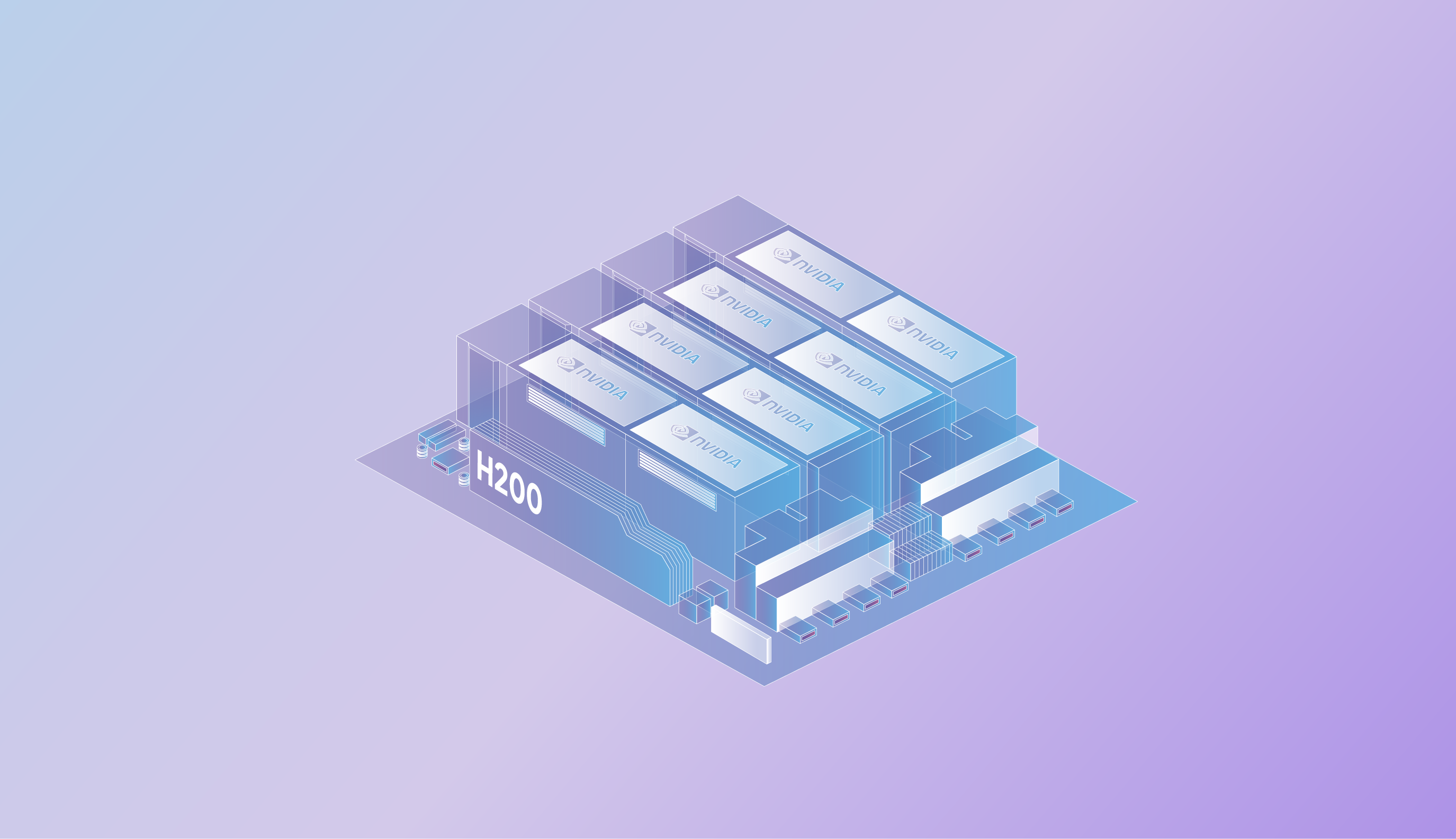
The rise of open source AI has led to increased infrastructure demands, requiring GPUs like the NVIDIA H200 SXM that support large-scale, memory-intensive workloads. As AI systems evolve towards continuous adaptation, managed GPU environments emerge as essential for effective operation, reducing overhead and enhancing performance across diverse production scenarios.

From decoding the human genome to enabling AI-powered diagnostics, High-Performance Computing (HPC) has redefined how healthcare operates. What once cost billions now drives real-time precision medicine, faster drug discovery, and equitable access to advanced treatments.

The rise of Generative AI presents a trilemma for product leaders, who must choose between speed, cost, and security. A new solution, the Sovereign, Full-Stack AI Cloud, addresses these challenges effectively.


 Back to blog home