B300 in Production: What 18 Benchmark Runs Actually Showed

Updated on
Published on
By

Table of Content
About the author

Here’s a situation most AI teams hit before they expect to. Two teams build chatbots independently, both pulling from what they think are the right knowledge sources, and everything looks fine until a customer asks a question and gets two different answers depending on which bot they reach. Neither bot is technically wrong, they’re both drawing from real data – but no one built anything to make them aware of each other, and that gap between two perfectly functional tools is exactly where the experience falls apart.
That’s not a model problem, it’s a coordination problem, and it’s one of the more common reasons enterprise AI disappoints at scale, which is probably why 74% of enterprise CIOs say they regret at least one major AI vendor or platform decision they made in the past 18 months.
Not because the models failed them, but because the system around the models never existed.
The orchestration layer is what builds that system.
The orchestration layer is a software layer that sits between your AI models, agents, and data on one side, and your applications and end users on the other. What it’s controlling at any given moment:
IBM frames it with a traffic light analogy that’s worth repeating: each AI agent is like a traffic light managing its own intersection. Effective at its corner of the problem, but without something syncing all the lights across the city, traffic still doesn’t move. The orchestration layer is the system that syncs the lights.
In terms of where it sits: your applications and interfaces are at the top, the orchestration layer is one level below, and your models, agents, and data infrastructure live below that. Everything flows through the middle layer.
When a company has a single AI tool, coordination isn’t really a problem. When it has ten, the coordination problem becomes unavoidable. Most companies today have well more than ten.
A few numbers that show how fast this has moved:
What grows alongside all of this is what people call agent sprawl. Agents built by different teams, pulling from different data sources, solving adjacent problems without knowing the other exists. They duplicate work, contradict each other, and create overhead that lands on humans to untangle. The orchestration layer is what cuts through that.
Most explanations of orchestration stay abstract, so here’s what it’s actually managing. There are five core functions:
Organizations that get all five right are, according to IBM’s 2026 ‘AI in Motion’ study, 13 times more likely to successfully scale AI than those running without orchestration-led governance.
Customer support: A query arrives. The orchestration layer routes it to a triage agent that classifies the issue, passes it to a domain specialist that answers it, runs it through a compliance check, and escalates it to a human if confidence drops below a set threshold. The customer experiences one conversation. Four agents ran in sequence behind it.
Knowledge retrieval (RAG): A user asks a complex question. The orchestration layer retrieves relevant documents, ranks them by relevance, assembles a context window, sends it to the LLM, validates the output, and returns a response. What reads as a single answer is a six-step pipeline running underneath.
Fraud detection: An anomaly model flags a transaction. The orchestration layer passes it to a rules engine, routes it for analyst review if it crosses a risk threshold, logs the full decision context, and feeds the outcome back as a training signal. Without orchestration, every one of those handoffs has to be hardcoded or managed manually. The Confusion Worth Clearing Up
vs. an AI agent: An agent is a specialist – it reasons and acts within a bounded task. Orchestration is what coordinates multiple agents into a working system. One executes; the other manages.
vs. an API gateway: An API gateway handles routing and rate-limiting at the request level. Orchestration manages the full workflow that follows – across multiple steps, multiple models, and multiple outputs.
vs. MLOps: MLOps manages the lifecycle of individual models, meaning training, versioning, and deployment. Orchestration coordinates those models in live production workflows. They’re complementary, not the same job.
Orchestration runs at multiple levels in a real AI stack, and different tools handle different parts of it:
Most production AI systems run orchestration at more than one of these levels simultaneously. The container layer, the workflow layer, and the agent layer each solve a different part of the coordination problem, and in a mature AI stack, all three are running at once.
Start with integration before automation. You can’t reliably automate steps that aren’t properly connected in the first place. Clean data flow between systems is the foundation everything else depends on.
Build observability from the beginning. Retrofitting monitoring into a pipeline that’s already in production is expensive and usually incomplete. The time to instrument it is before it’s live.
Match your orchestration layer to the compute underneath it. If the infrastructure running your models isn’t designed to support the scheduling and routing patterns your orchestration layer needs, you’ll hit bottlenecks that no orchestration logic can paper over.
That third point is where the choice of compute platform actually starts to matter. Neysa Velocis is purpose-built so that orchestration layers can schedule, route, and scale workloads across GPU clusters without working against the infrastructure underneath them, which means the coordination layer you build on top has what it needs to actually function at scale.
Voice AI in India goes beyond convenience; it’s essential for digital inclusion amid linguistic and cultural diversity. Navana AI emphasizes that effective voice systems must operate reliably, achieving high accuracy in challenging environments. efficiency and trust, vital for successful implementation.
Back to Blog Home Table of Content Remember the Internet? The current conversations surrounding the adoption of (artificial intelligence) AI in business are reminiscent of conversations in the late 20th century. A time when the internet and personal computers (PCs) began to challenge how things had always been done. When people first saw or used […]
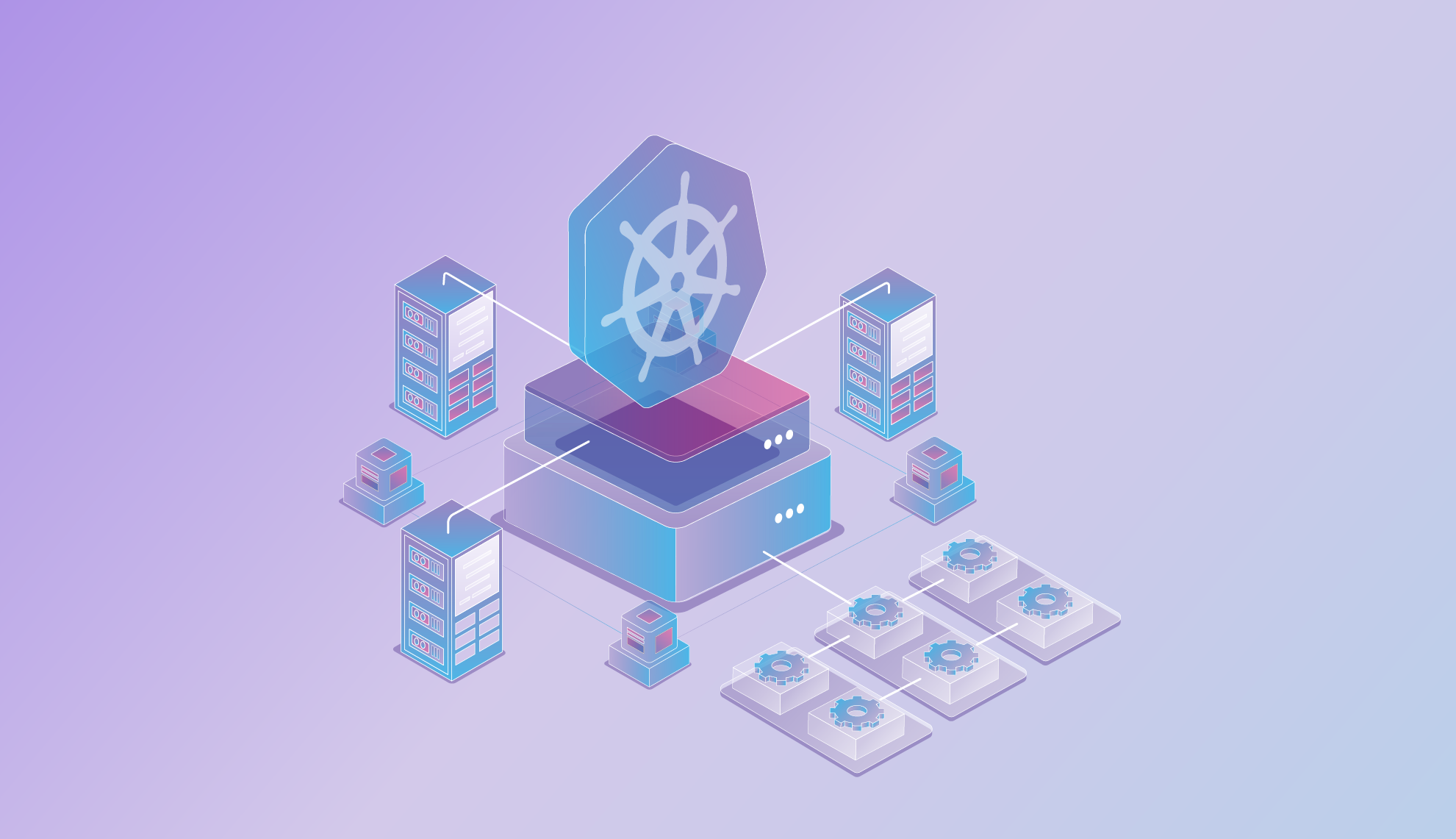
At scale, Kubernetes behaves less like a tool and more like a distributed operating system. Scheduling, recovery, and scaling all depend on how well the control plane and worker nodes interact. Decisions are centralized, execution is distributed, and reconciliation never stops. When these layers drift out of balance, reliability suffers.