B300 in Production: What 18 Benchmark Runs Actually Showed

Updated on
Published on
By

Table of Content
About the author

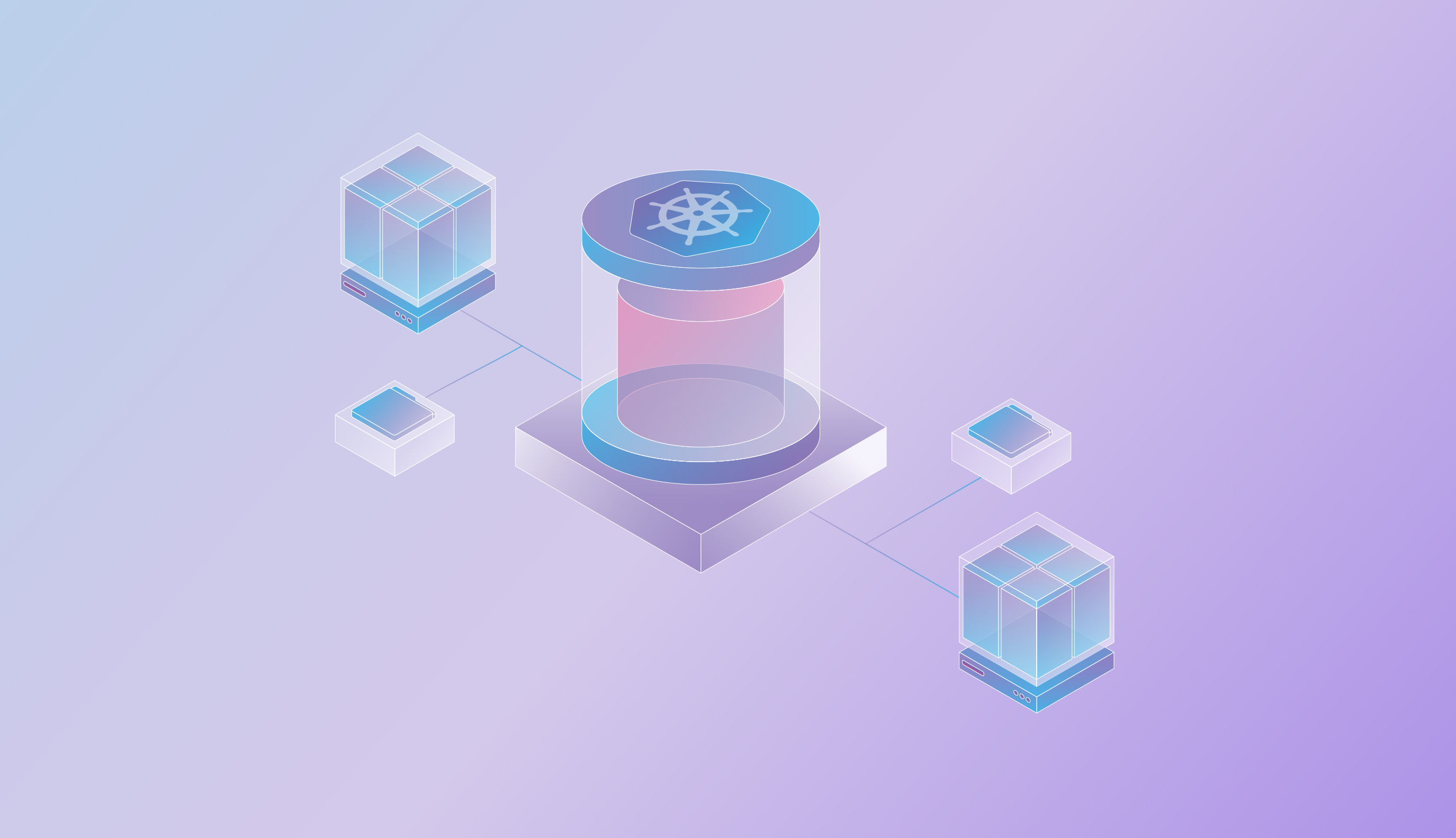
Kubernetes begins with a deceptively simple promise that every pod gets its own IP address, and every pod can communicate with every other pod directly, without NAT. From the perspective of an application running inside a pod, the network should feel flat and predictable, regardless of which node the pod is scheduled on, which becomes especially important in an AI tech stack running distributed workloads.
This model copies the way developers expect things to work on a single machine. Applications use ports, make connections, and send data without worrying about extra layers or proxies. Kubernetes extends this idea to a whole cluster, making many machines act like one shared network.
Kubernetes makes managing distributed systems easier, especially when it comes to networking. Applications scale, pods are relocated, services are redistributed, and traffic flows automatically, all without developers needing to configure IP addresses or set up routes manually. As a result, pod-to-pod communication generally happens seamlessly.
However, Kubernetes networking is a fundamental part of the system. It ensures that every pod can communicate with every other pod, across nodes and namespaces, without developers having to know the network’s underlying structure. This guarantee requires a thoughtfully designed model and an abstraction layer that Kubernetes leaves to external tools.
This abstraction is called the Container Network Interface (CNI). Kubernetes’ networking model and the CNI ecosystem form the base that allows microservices, service meshes, databases, and AI tasks to work reliably at scale. At that point, networking stops being ‘just connectivity’ and starts behaving like a core AI acceleration cloud system concern.
This foundation is what keeps systems responsive, easy to debug, and secure – or exposes where they might struggle.
A pod represents the smallest schedule-able unit in Kubernetes, and networking is scoped at the pod level rather than the container level. All containers inside a pod share the same network namespace. They see the same IP address, the same network interfaces, and the same port space.
This design choice allows tightly coupled containers to communicate over local host while presenting a single network identity to the rest of the cluster. It also simplifies service discovery and routing, since Kubernetes never needs to reason about individual containers from a networking perspective.
When a pod is created, Kubernetes expects it to be assigned a unique IP address that is routable from every other pod in the cluster. This IP must remain stable for the lifetime of the pod. If the pod is rescheduled or recreated, it receives a new IP, but while it exists, its network identity does not change.
This requirement makes Kubernetes networking different from traditional container setups, which often use port mapping or NAT. Kubernetes favors consistency and transparency, even if it adds complexity to the underlying infrastructure.
Pod-to-pod communication becomes more complex the moment traffic leaves a node. Within a single machine, virtual Ethernet pairs and Linux bridges can handle packet delivery efficiently. Once packets must traverse nodes, routing, encapsulation, and policy enforcement come into play.
Different environments introduce different constraints. In cloud environments, network policies may restrict direct routing between subnets. On bare metal, IP address management and route distribution become critical. In hybrid environments, latency and security requirements can vary dramatically between segments of the cluster.
At this point, Kubernetes stops making decisions. It does not choose whether to tunnel or route traffic directly, or whether to encrypt it. Those choices depend on the environment and security needs. Kubernetes only requires that pods can reach each other, not how it happens.
This is where the CNI plugin becomes the real implementation of Kubernetes networking.
CNI is not a networking product. That separation of model versus implementation is the same design principle behind an AI platform as a service. It is a contract. Kubernetes invokes a CNI plugin whenever a pod is created or destroyed and expects the plugin to perform a defined set of actions – assign an IP address, configure network interfaces, update routing tables, and ensure that the pod can reach and be reached by others.
How this is done depends on the plugin. Some CNIs use overlay networks to make routing simpler. Others rely on direct routing and BGP to connect with the network. Some focus on easy setup, others on high performance or strict security.
This flexibility is intentional. Kubernetes must operate across laptops, public clouds, private data centers, and sovereign environments. CNI allows the same Kubernetes model to adapt to each context without changing application behavior.
As a result, things like latency, speed, and failures depend more on the chosen CNI than on Kubernetes itself.
Run distributed AI workloads with reliable networking, orchestration, and low-latency performance.

When one pod sends traffic to another, the packet originates inside the pod’s network namespace and follows routes installed by the CNI. If the destination pod lives on the same node, the packet may never leave the host. If it lives elsewhere, the packet traverses the host network stack, possibly wrapped in an overlay protocol, before arriving at the destination node and entering the target pod’s namespace.
Along this path, additional components may intervene. Network policies may permit or deny the traffic. Load-balancing rules may rewrite destinations. Observability hooks may record flows for debugging or audit purposes. Each step adds capability – but also potential overhead.
Applications do not see any of this complexity. For them, connections just work or don’t – based only on IPs and ports. The system handles all the details.
The efficiency, predictability, and debuggability of this path depend entirely on how the CNI is implemented and integrated with the rest of the cluster.
As clusters grow, networking decisions stop being invisible. Latency accumulates. Packet drops become harder to trace. Network policies add enforcement overhead. Overlay encapsulation introduces CPU cost. Debugging spans kernel space, user space, and distributed systems.
This is often where teams realize that Kubernetes networking is not “set and forget.” The CNI becomes a foundational infrastructure choice that shapes performance, security, and operational clarity. A poorly tuned network layer can silently undermine otherwise well-designed systems.
For AI workloads, microservice-heavy platforms, and latency-sensitive systems, these effects compound quickly. East–west traffic dominates. Large payloads move frequently. Small inefficiencies scale into systemic issues that show up as slow inference, delayed pipelines, or unstable services.
Networking becomes less about just connecting things, and more about keeping them working well under pressure.
At Neysa, Kubernetes is treated as part of a tightly integrated AI-native stack instead of just as generic orchestration layer. Networking, compute, and orchestration are designed together, because in real systems, they fail together.
Velocis environments are engineered so that pod-to-pod communication remains predictable even under heavy load. CNI configurations are chosen and tuned to support high-throughput, low-latency east–west traffic common in distributed AI workloads. Network policies are enforced without introducing unnecessary jitter, and traffic paths remain observable across training and inference pipelines.
Instead of teams needing to reason about overlays, routing modes, or kernel-level behavior, the platform provides a networking foundation aligned with how modern workloads actually behave. Kubernetes clusters can scale, rebalance, and recover without networking becoming the hidden bottleneck that surfaces only when systems are already under stress.
In this model, CNI is not an afterthought or a checkbox during cluster setup. It is a first-class component of the AI infrastructure fabric.
Pod-to-pod communication is one of Kubernetes’ most powerful abstractions and also one of its most misunderstood aspects. Kubernetes promises a simple, flat network while intentionally refusing to define how that promise is delivered.
The Container Network Interface (CNI) exists to make that promise real. Every packet exchanged between pods flows through decisions encoded in the CNI, shaping performance, security, and reliability in ways that only become visible at scale.
As Kubernetes clusters move from simple services to complex, AI-driven systems, networking stops being invisible. It becomes a strategic layer of infrastructure one that determines whether systems remain resilient or gradually erode under growth.
Platforms like Neysa Velocis recognize this change. By treating networking, compute, and orchestration as one system, they help Kubernetes work as a single, smooth environment that can scale easily.
In modern infrastructure, the network is not just how systems connect. It is how they perform, how they trust and how they grow.
Deploy, run, and scale on infrastructure designed to keep your AI moving forward.

High throughput in inference decides whether an AI system feels reliable or fragile at scale. As enterprises move from pilots to production, serving thousands of real-time requests becomes the real challenge that separates strong AI systems from unstable ones.
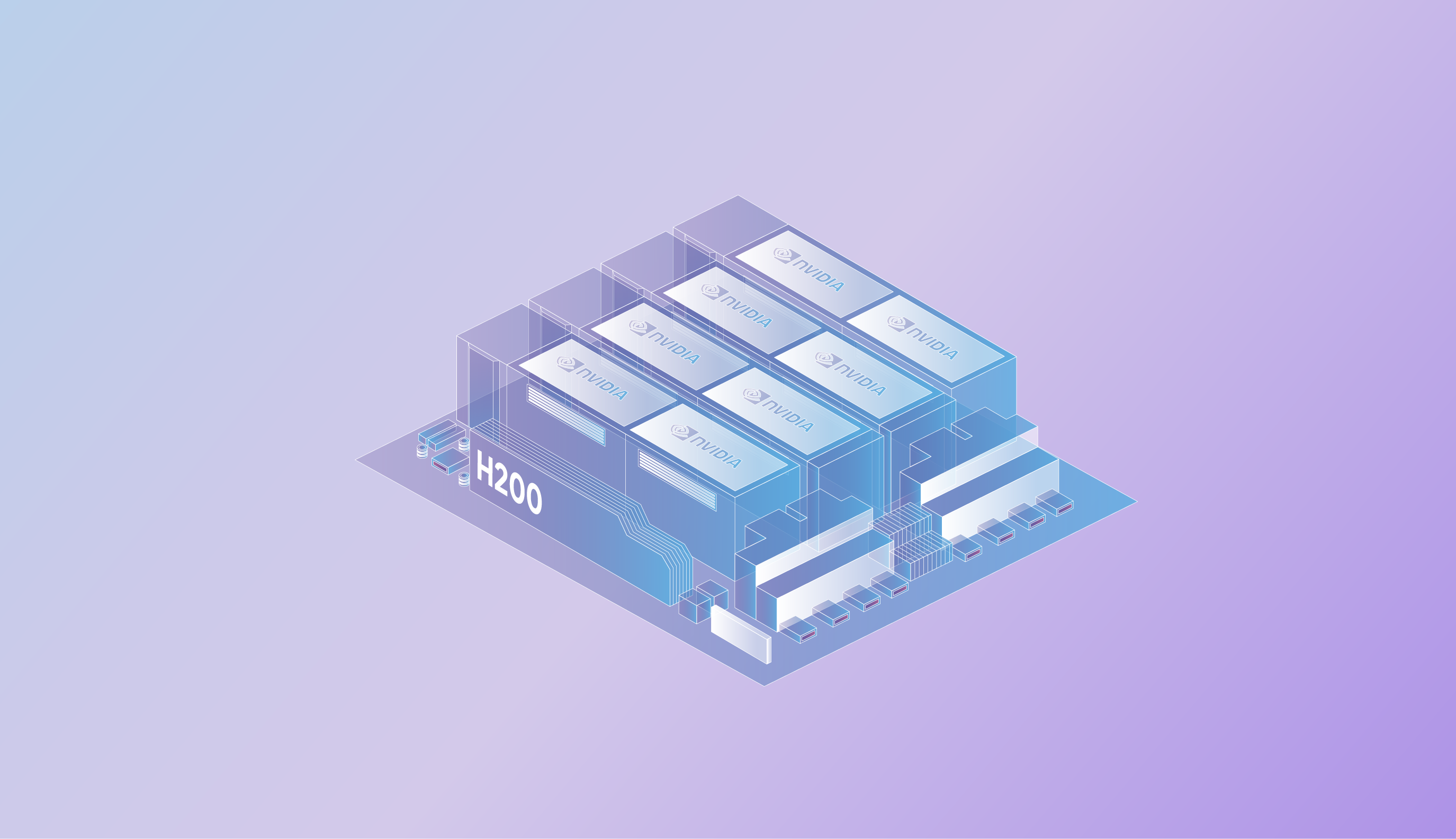
The rise of open source AI has led to increased infrastructure demands, requiring GPUs like the NVIDIA H200 SXM that support large-scale, memory-intensive workloads. As AI systems evolve towards continuous adaptation, managed GPU environments emerge as essential for effective operation, reducing overhead and enhancing performance across diverse production scenarios.




 Back to blog home