
MCP: The Protocol That Taught AI to Use Tools

Search Neysa
Updated on
Published on
By

Table of Content
What separates an AI experiment from an AI-powered organisation? It is not just the quality of your ideas. It is the quality of your foundations. Too many teams amass a collection of brilliant, disjointed tools, a state-of-the-art model here, a specialised database there. They can prove a concept, but they cannot power a product. The chasm between a prototype and a production-ready system is vast, and it is filled with technical debt, scaling nightmares, and squandered potential.
The real differentiator is a deliberate, integrated technology foundation. Think of it not as a random assortment of software, but as a living, breathing architecture. Your AI tech stack is the central nervous system of your intelligent organisation. Getting it right means your best ideas can move from a developer’s laptop to a global user base with speed, reliability, and measurable impact. Let us map out the blueprint for this architecture, layer by layer.
To understand how these layers interact, imagine you are a chef building a world-class kitchen. You would not just buy the most expensive oven and call it a day. Your success depends on the entire workflow.
Data Layer: This is your cold storage, pantry, and ingredient preparation area. It is where you source, clean, chop, and store everything you need. The quality of your final dish is predominantly dependent on what happens here.
Orchestration & Pipelines: This is your mise en place and the head chef coordinating the kitchen. It is the system that ensures the pasta is boiled just as the sauce finishes reducing, and the garnish is plated the moment the main is ready. It is the workflow and timing that turns individual ingredients into a synchronised meal.
Compute (GPUs): These are your hobs, ovens, and grills. They are the powerful, specialised appliances that apply intense, focused energy to transform raw ingredients. You need the right type and number of them, and they must be available on demand during a busy service.
Model Layer: This is your recipe book and the chef’s own skill. It contains the foundational knowledge and techniques for creating dishes, from a classic béchamel to a revolutionary new flavour combination.
Application & Inference Layer: This is the final plated dish served to the customer. It is the accessible, reliable, and delightful endpoint where all the preparation and hard work delivers its value.
With this kitchen in mind, let us examine each station in detail.
Before a single model is trained, you need to confront the raw material of intelligence: data. This layer is often the most unglamorous, yet it is the most critical. Garbage in, garbage out is not just a cliché; it is the primary reason AI initiatives stall.
A modern AI tech stack moves beyond traditional data warehouses. You are dealing with unstructured data, text, images, audio, and video. Your stack needs to handle this complexity.
Key Components:
Vector Databases: These are specialised storage systems that hold data as mathematical vectors. They are essential for enabling semantic search, recommendation engines, and retrieval augmented generation (RAG). Tools like Pinecone, Weaviate, and Chroma are designed to perform lightning fast similarity searches across billions of data points.
Data Processing Frameworks: Apache Spark or Daft are the workhorses that clean, label, and transform massive datasets into a usable format for training.
Feature Stores: A feature store is a central repository for curated, reusable data features. Instead of every data scientist engineering the same “user purchase frequency” feature from scratch, they can access a validated, version controlled version. This ensures consistency between training and inference, a common source of model failure.
The “So What?” for Decision-Makers: Investing here is about velocity and quality. A robust data layer means your data scientists spend less time hunting for data and cleaning it, and more time building models. It means your models are trained on consistent, high quality data, making their predictions more reliable. Neglecting this layer creates a hidden tax on every future AI project.
You have your ingredients prepared. Now, you need a head chef to direct the kitchen. In the AI tech stack, this is the orchestration layer. It automates the multi-step workflows that define the machine learning lifecycle.
This is where tools like Kubeflow, MLflow, and Metaflow come into play. They allow you to define a pipeline as code: ingest data, pre-process it, train a model, evaluate performance, and deploy it. This pipeline becomes a repeatable, automated process.
Reproducibility: You can rerun any past experiment or production model with absolute certainty that you are using the same code, data, and environment.
Scalability: Orchestrators like Kubeflow run on Kubernetes, meaning your pipeline can dynamically scale from using a single CPU to hundreds of GPUs without you rewriting a line of code.
Resilience: If a step in your 12-hour training job fails, a good orchestrator can retry from the point of failure, saving time and resources.
This layer transforms a one-off script into a reliable, industrial grade process. It is the difference between a home cook preparing a meal and a restaurant serving a hundred identical meals night after night.
The orchestration layer instructslayer tells the kitchen what to do. The compute layer provides the firepower. GPUs are the specialised, high performance ovens of our kitchen analogy. They are exceptionally good at the parallel mathematical calculations required for training and running deep learning models.
The challenge is not just acquiring GPUs; it is managing them efficiently. A static cluster of GPUs is like owning a power plant that you only use during peak demand. It is incredibly expensive and mostly idle.
Modern GPU management is about abstraction and elasticity. You should not have to physically log into servers or worry about driver versions. Platforms like Neysa, AWS EC2, Google Cloud GKE, and CoreWeave provide access to GPU capacity on demand. With Kubernetes, you can create a shared pool of GPU resources that different teams and projects can draw from, with the system automatically scaling up and down based on workload.
This elastic approach to compute is fundamental to controlling costs while maintaining the ability to tackle the largest training jobs or handle spiky inference traffic. The goal is to treat immense computational power as a utility, available on tap, not as a fixed, capital intensive asset.
This is where the magic is codified. The model layer encompasses everything from the foundational models you start with to the frameworks you use to build and train your own.
The debate has largely converged. PyTorch has become the framework of choice for the vast majority of new research and development. Its intuitive, Pythonic interface makes it feel like a natural extension of the scientific Python ecosystem. It is the go to for rapid prototyping and experimentation. TensorFlow, with its robust production deployment tools, still holds sway in certain enterprise environments, but the momentum is decisively with PyTorch.
Very few organizations need or should attempt to train a large language model from scratch, because they lack the fundamental expertise in doing so and it also is much like creating the wheel all over again. The smarter strategy is to build upon foundational models like Llama, Mistral, or OpenAI’s GPT series. This approach, often called fine tuning, allows you to take a model that already possesses a vast understanding of language and specialise it for your specific domain using your proprietary data.
This is where platforms like Neysa provide a significant advantage. Managing these large models, their versions, and the fine tuning process across different GPU clusters is a complex operational burden. Neysa’s unified AI PaaS abstracts this complexity, offering a centralized environment to manage, fine tune, and serve a portfolio of models, turning a fragmented process into a streamlined workflow.
A model sitting in a repository is a cost centre. A model serving predictions to users is a value driver. The inference layer is where your AI tech stack meets the world. This is about serving your model’s predictions reliably, securely, and with low latency at scale.
Key Considerations for Inference:
Serving Engines: You need specialised software like TensorFlow Serving, Triton Inference Server, or TorchServe. These are built to handle multiple inference requests concurrently, batch them efficiently for GPU use, and manage model versioning with no downtime.
APIs and Endpoints: Your model must be wrapped in a clean, well documented API. This allows your front end applications, internal tools, or partner systems to request predictions easily.
Performance and Monitoring: You need to monitor latency (how long a prediction takes) and throughput (how many predictions per second you can handle). More importantly, you must monitor for concept drift the phenomenon where the model’s performance degrades over time as the real world data it encounters changes from the data it was trained on.
Deploying a model is not the finish line; it is the starting line for its operational life. A robust inference layer ensures your AI tech stack delivers a consistent, high quality experience to your end users.
How does this entire architecture come together to solve actual problems?
Data Layer: A data lake ingests millions of daily transactions, enriched with customer history and merchant data. A feature store maintains calculated features like “transaction velocity.”
Orchestration: An Apache Airflow pipeline runs every hour, pulling new transactions, generating features, and triggering model inference.
Compute: The training of the fraud detection model, a complex graph neural network, was run on a cluster of A100 GPUs. For inference, a smaller, optimised model runs on less powerful, but more cost effective, T4 GPUs.
Model Layer: A PyTorch based model, fine tuned on the institution’s proprietary historical fraud data.
Inference: The model is served via a high throughput inference endpoint. A low latency API integrates directly with the payment processing system, providing a risk score in milliseconds to approve or flag a transaction.
Data Layer: A vector database stores embeddings for all products in the catalogue. A customer data platform feeds real time user behaviour into a feature store.
Orchestration: A Kubeflow pipeline regularly retrains the recommendation models on the latest user interaction data to keep recommendations fresh.
Compute: Training happens on demand using spot instances to reduce costs. Inference requires a scalable CPU based cluster to handle the high volume of recommendation requests on product pages.
Model Layer: A combination of models: a collaborative filtering model for “users like you also bought,” and a more complex transformer based model for understanding semantic search queries.
Inference: When a user visits a product page, an API call is made to the inference service. The service queries the vector database for similar products and uses the live user context from the feature store to rank and return the most relevant recommendations in under 100 milliseconds.
Building the AI Tech stack is not about buying every tool on the market. It is about making strategic choices that fit your team’s expertise and your company’s goals.
Start with the Outcome. Work backwards from the application you want to build. Is it a real time chatbot? A batch based predictive maintenance system? The requirements of the application will dictate the priorities of your AI tech stack.
Prioritise Integration. The best individual tools are worthless if they cannot communicate. Choose tools with open APIs and a strong ecosystem. The seams between your layers are where complexity and failure breed.
Embrace Managed Services Where It Matters. Your team’s unique value is in building models and applications, not in managing database clusters or GPU drivers. Leverage managed services for your data layer, orchestration, and compute to accelerate your time to market. This is the philosophy behind platforms like Neysa, which integrate these layers into a cohesive experience, allowing your team to focus on innovation rather than infrastructure.
Plan for Change. The AI landscape shifts quarterly. Build your AI tech stack with modularity in mind. You should be able to swap out your vector database or your serving engine without having to rebuild everything from the ground up.
The ideal AI tech stack is not a fixed checklist. It is a dynamic, well integrated system that amplifies your team’s talent. It turns computational power into a strategic advantage and raw data into genuine intelligence. By building with this architectural mindset, you are not just adopting new tools; you are building an organisation that can learn, adapt, and lead.
The most common mistake is starting with the model. Teams get excited by a new LLM and build a prototype, only to realise their data is inaccessible, unclean, or unusable. This leads to massive rework. Always start with your data strategy. The quality and structure of your data will dictate the ceiling of your model’s performance.
This is a core architectural decision. A best of breed approach using individual open source tools offers maximum flexibility but requires significant in house expertise to integrate and maintain. A unified platform like Neysa sacrifices some granular control for a dramatically faster setup and reduced operational overhead. The right choice depends on whether your competitive advantage lies in building unique AI infrastructure or in building unique applications. For most companies focused on application, the unified platform is the faster path to value.
The orchestration layer is your bridge. Use it to create pipelines that pull data from your legacy databases and data warehouses. The output of your AI models can be written back to these systems or served via APIs that your existing applications can consume. The goal is to augment your current infrastructure, not replace it overnight. Start with a single, high value use case that connects to one legacy system to demonstrate value and build momentum.
GPU costs are highly variable and should be treated as an operational expense, not a capital one. For inference, costs can be reasonably predictable based on user traffic. For training, costs are spiky. The key to budgeting is to use an elastic, AI cloud provider to avoid large upfront commitments. Implement strong cost monitoring and tagging from day one to attribute spending to specific projects and teams, ensuring you only pay for what you use.
Build and scale your next real-world impact AI application with Neysa today.
Share this article:


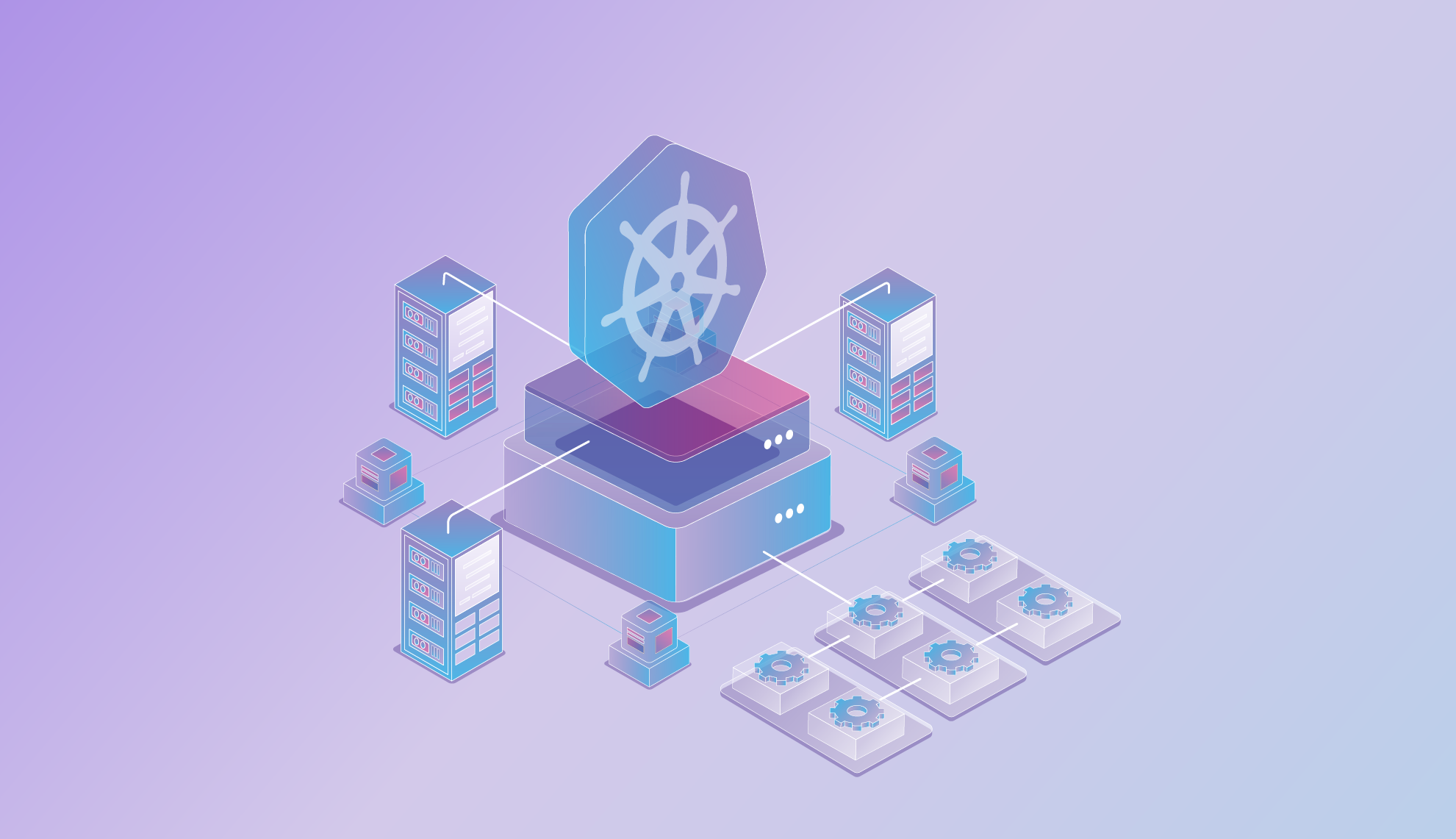
At scale, Kubernetes behaves less like a tool and more like a distributed operating system. Scheduling, recovery, and scaling all depend on how well the control plane and worker nodes interact. Decisions are centralized, execution is distributed, and reconciliation never stops. When these layers drift out of balance, reliability suffers.