NVIDIA B300 Explained: Specs, Use Cases, and Why It Exists

Updated on
Published on
By

Table of Content
What’s powering your favourite AI chatbot, breathtaking game visuals, or self-driving car algorithms?
Spoiler: It’s not just clever code or fancy models. Welcome to 2025, where AI isn’t just a buzzword—it’s the engine behind the biggest leaps in business, innovation, and daily life. While the headlines rave about ChatGPT, GenAI marvels, and multimodal magic, the real MVP often goes unmentioned. Behind every jaw-dropping AI demo is a silent powerhouse: NVIDIA GPU architecture.
NVIDIA has dominated the space with a relentless cadence of architectural innovation. From Pascal and Volta to today’s cutting-edge Hopper and Blackwell, every generation has made AI workloads faster, more memory-efficient, and more scalable. But unless you understand what’s really inside these GPUs—how they handle parallelism, how Tensor Cores accelerate matrix ops, how NVLink eliminates interconnect bottlenecks—you’re flying blind when it comes to scaling your AI stack.
At Neysa, we often meet teams who’ve hit a wall—not because their models weren’t good, but because they were running those models on hardware that wasn’t built for the job. That’s where GPU architecture awareness becomes your secret edge.
In this blog, we’ll guide you through each of these architectures that have evolved over the years, and how they can be leveraged.
| Architecture | Year | Key Feature | Use Cases |
| Blackwell | 2024 | AI, HPC, RTX 5000 series | AI training, gaming, data centers |
| Hopper | 2022 | Transformer Engine, FP8 | AI, deep learning, HPC |
| Ampere | 2020 | 2nd-gen RT Cores, DLSS 2.0 | Gaming (RTX 30), AI |
| Turing | 2018 | First real-time ray tracing | RTX 20 series, AI |
| Volta | 2017 | First Tensor Cores | AI, deep learning |
| Pascal | 2016 | Major gaming improvements | GTX 10 series |
| Maxwell | 2014 | Power-efficient | GTX 900 series |
| Kepler | 2012 | First GPU Boost | GTX 600/700 series |
| Fermi | 2010 | CUDA core improvements | Early AI, gaming |
Blackwell, NVIDIA’s latest architecture, is designed explicitly for the next generation of Generative AI workloads. Its flagship chips, the B100 and B200, boast a dual-die design, over 208 billion transistors, and up to 192 GB of HBM3e memory with an effective bandwidth of 4.8 TB/s. That’s not a typo—Blackwell moves data almost twice as fast as Hopper.
But raw speed isn’t its only selling point. Blackwell introduced the NVLink Switch System, offering 10 TB/s of inter-GPU bandwidth, which enables multi-GPU setups to train trillion-parameter models in real-time. It also includes enhanced MIG, confidential computing capabilities, and further optimised FP8 throughput.
For AI-intensive uses, Blackwell is a smart bet on the future. It handles large context windows, persistent memory for retrieval models, and ultra-fast inference. For data mining, it means no more batch size compromises, fewer memory errors, and better latency.
Blackwell isn’t just a GPU. It’s an AI infrastructure platform in a chip.
Hopper took NVIDIA’s AI ambitions to a new level. The flagship H100 GPU introduced the Transformer Engine, a feature designed specifically for accelerating transformer-based models like GPT, LLaMA, and BLOOM. This engine supports dynamic mixed precision, switching between FP8, FP16, and BF16 based on the operation and layer type.
Hopper also came with fourth-generation Tensor Cores, up to 80 GB of HBM3 memory, and support for NVLink 4.0, enabling bandwidths of up to 3.35 TB/s. The H100 delivered up to 6x speedup in LLM inference compared to A100, and significantly reduced training time for large models.
For data geeks, the reduced time-to-first-result enabled faster experimentation and iteration. For AI-heavy users, Hopper represented a strategic investment—it could support both fine-tuning and production-scale inference for multiple teams simultaneously.
Hopper is also energy-efficient, making it a popular choice for data centres concerned about operational cost and environmental impact.
With the release of Ampere and the A100 GPU, NVIDIA brought serious performance gains for both AI training and inference. Ampere introduced third-generation Tensor Cores, which added support for structural sparsity—a technique that allows skipping zero values in neural networks to achieve higher throughput. This doubled performance in many real-world workloads.
The A100 supported FP64, FP32, FP16, BF16, and INT8 computation, and its HBM2e memory allowed bandwidths up to 2 TB/s. It also introduced Multi-Instance GPU (MIG), which enabled partitioning a single GPU into multiple logical instances. This was a game-changer for cloud providers and shared environments.
AI Labs could use MIG to allocate fractional GPUs to different teams. Data scientists could use full instances to train LLMs like GPT-3 variants or multimodal models with high batch sizes. Ampere remains one of the most versatile GPU architectures—still widely used today in cloud, edge, and enterprise AI deployments.
Turing was a hybrid architecture that tried to strike a balance between AI, real-time ray tracing, and graphics rendering. While not a go-to for training large models, Turing-based GPUs like the T4 and RTX 2080 Ti became go-to hardware for AI inference at scale.
Turing introduced second-generation Tensor Cores and RT Cores, allowing it to handle INT8 and INT4 precision for accelerated inference. These lower precision formats reduced model size and improved throughput, making Turing especially useful for deploying AI models in production, on the edge, or in low-latency environments like chatbots and recommendation engines.
Its GDDR6 memory wasn’t as fast as HBM2, but sufficient for inference tasks. For data scientists working on computer vision or edge ML, Turing-based hardware could handle substantial workloads with reasonable performance.
Turing also democratized AI computing, appearing in consumer-grade GPUs that allowed startups and hobbyists to experiment without investing in data centre-class hardware.
Volta marked a true turning point in NVIDIA’s architecture roadmap, particularly for AI. The Tesla V100 GPU brought the first generation of Tensor Cores, designed specifically to accelerate matrix multiplications—the bedrock of deep learning. This hardware innovation enabled native FP16 performance, which effectively doubled training speeds over FP32 without a major loss in model accuracy.
Each V100 came with 5,120 CUDA cores, 640 Tensor Cores, and up to 32 GB of HBM2 memory. Volta also offered higher NVLink bandwidth, making multi-GPU scaling more seamless. It was during this era that deep learning frameworks like TensorFlow and PyTorch started supporting mixed-precision training, unlocking the full potential of Tensor Cores.
In enterprise environments, Volta was used to train early transformer models like BERT and GPT-2. It was expensive but powerful. For AI infrastructure leads, Volta was a proof of concept that dedicated AI hardware could vastly outperform general-purpose computers.
Pascal was NVIDIA’s first significant step into deep learning, even though it wasn’t explicitly built for AI. The flagship Tesla P100 GPU came equipped with 3,584 CUDA cores, 16 GB of HBM2 memory, and support for NVLink, NVIDIA’s then-new interconnect technology. What made Pascal revolutionary at the time was its superior energy efficiency and memory bandwidth of up to 900 GB/s—huge gains over previous generations.
Although it lacked Tensor Cores (which were introduced in the next generation), Pascal still delivered significant acceleration for training convolutional neural networks and running parallel simulations. Many early AI research papers and models were trained using Pascal GPUs. The architecture also featured unified memory, which improved data handling between the CPU and GPU.
For advanced users, Pascal would be outdated today, but it laid the groundwork for what came next. In smaller labs or edge use cases, Pascal may still serve lightweight ML tasks, image processing, or educational environments.
Maxwell represented a significant leap in NVIDIA’s GPU architecture, particularly when it came to power efficiency. With its GM204 chip, the GTX 980 and GTX 970 emerged as the standout GPUs, offering impressive performance without the power consumption penalties of earlier architectures. The Maxwell architecture focused heavily on reducing thermal output and increasing performance-per-watt. It also introduced support for multi-frame
sampled anti-aliasing (MFAA), a technique that improved visual quality while reducing the performance hit from traditional anti-aliasing methods.
Maxwell wasn’t created with deep learning in mind, but it set the stage for the powerful AI-focused GPUs that followed. With 2048 CUDA cores and 4 GB of GDDR5 memory, the architecture was suitable for entry-level parallel computing tasks, including image processing, light AI inference, and machine learning on a budget. It wasn’t as capable for large-scale AI training, but for smaller-scale models, it worked well in research and development environments.
For AI practitioners, Maxwell GPUs may not be up to par with today’s demands. Still, they served as a stepping stone, enabling more developers to enter the GPU-accelerated world.
Kepler was the architecture that firmly established NVIDIA as the leader in GPU-accelerated computing for both graphics and general-purpose computations. The GK110 chip, featured in the Tesla K20 and GeForce GTX 680, emphasised energy efficiency and parallel processing. Kepler’s innovations in performance-per-watt made it a go-to solution for both gaming and early AI tasks, laying the foundation for GPUs to be used in research, data centres, and scientific simulations.
The architecture introduced several key features, such as the SMX (Streaming Multiprocessor) architecture, which consolidated the CUDA cores and enhanced throughput. Kepler was also notable for its enhanced dynamic power management, which improved GPU efficiency during intense workloads. For early adopters of GPU-accelerated AI, such as academic institutions or research labs, Kepler GPUs were often used in the first forays into deep learning, especially for tasks like image recognition and data mining.
For professionals, Kepler represented a turning point in parallel processing, enabling data-intensive tasks that were previously only possible with CPUs. It was the bridge to the more specialised architectures that followed, particularly when it came to scalability and performance in real-world applications.
Fermi marked a crucial turning point for NVIDIA, as it was the architecture that truly established GPUs as powerful parallel computing engines for a wide variety of workloads, from graphics rendering to scientific simulations and early AI tasks. The Tesla Fermi cards, including the Fermi-based GTX 480, were a direct evolution of the earlier GT200 series, offering improved CUDA capabilities and introducing the ECC (Error Correcting Code) memory, essential for computational accuracy in high-stakes workloads.
Fermi’s key breakthrough was its leap in double-precision performance, unlocking serious potential for scientific computing and early data science work. The architecture boasted up to 512 CUDA cores and featured support for OpenCL and DirectCompute, bridging the gap between GPUs and other forms of compute processing.
Although Fermi wasn’t designed specifically for AI, it was a crucial bridge in NVIDIA’s journey toward AI acceleration. Its higher precision and better memory hierarchy helped pave the way for deep learning workloads, even if it lacked the specialised features we see in later architectures like Tensor Cores. For companies like research labs, Fermi was often used for initial AI experiments, especially in scientific computing, where precision was paramount.
These entries follow a similar structure to the previous ones, providing key insights into each architecture’s evolution and impact on the field of AI, parallel computing, and more.
The world of AI is scaling faster than ever, and beneath all the impressive outputs, from realistic images to near-human conversations, is a complex, often overlooked layer: GPU architecture.
If you’ve made it this far, you already know that choosing a GPU isn’t just about specs. It’s about matching your architecture to your model size, use case, team goals, and growth horizon.
We’ve explored how NVIDIA’s GPU architectures have evolved—from the modest Pascal cards that powered early academic work, to today’s Blackwell beasts designed to tame the largest foundation models in existence.
Here’s where Neysa Velocis steps in. We don’t just give you GPUs. We give you architecture-aware, maturity-matched, budget-friendly compute with the flexibility to grow as you grow. Whether you need Hopper for LLM inference or fractional Blackwell nodes for foundation model training, Neysa helps you climb smart, not hard.
Build and scale your next real-world impact AI application with Neysa today.
Share this article:



Back to Blog Home Table of Content Remember the Internet? The current conversations surrounding the adoption of (artificial intelligence) AI in business are reminiscent of conversations in the late 20th century. A time when the internet and personal computers (PCs) began to challenge how things had always been done. When people first saw or used […]
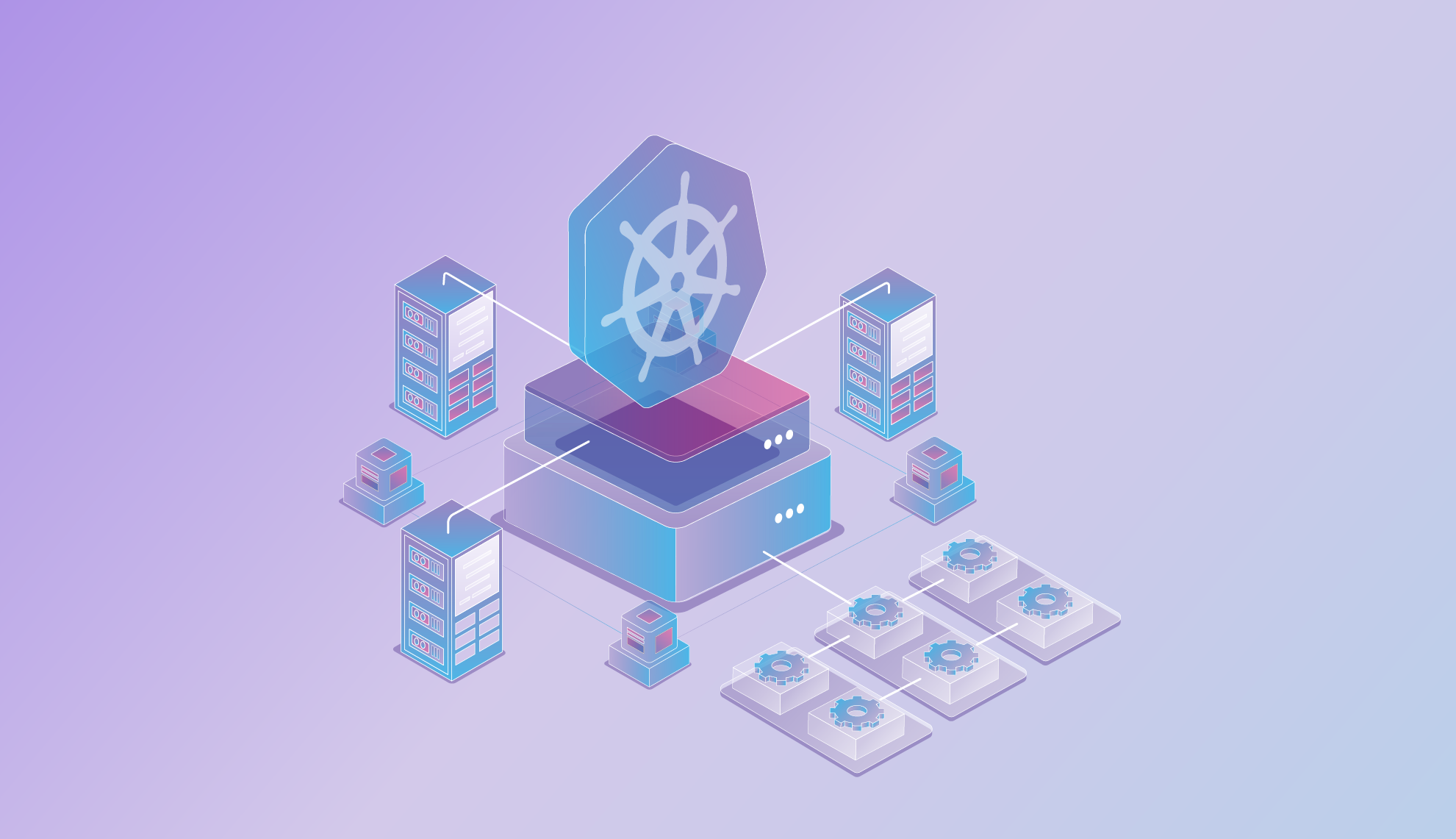
At scale, Kubernetes behaves less like a tool and more like a distributed operating system. Scheduling, recovery, and scaling all depend on how well the control plane and worker nodes interact. Decisions are centralized, execution is distributed, and reconciliation never stops. When these layers drift out of balance, reliability suffers.