B300 in Production: What 18 Benchmark Runs Actually Showed

Updated on
Published on
By

Table of Content
About the author

Most AI assistants today can answer questions. What they can’t do is act.
Ask a model to summarize last quarter’s sales, and it’ll write you a beautiful template.
Ask it to pull the actual numbers, cross-reference with your CRM, and flag anything below target. That’s where most AI tools fall flat.
This doesn’t necessarily signal that the model is not good enough; mainly because it has no way to reach the systems that hold the data. MCP is an attempt to fix that.
Before MCP, connecting an AI model to any external tool meant writing a custom integration. Your AI assistant needed access to Slack? Someone built a connector.
It needed to query your database? Another connector. Jira tickets, Google Drive, GitHub repos – each one required its own implementation.
Teams ended up spending more time maintaining glue code than building anything useful. And every time a vendor changed their API, something broke.
The problem compounds when you’re dealing with multiple models or multiple tools. A system using GPT-4 for one task and Claude for another couldn’t easily share the same integrations. Everything was built for a single specific setup, which meant starting over whenever requirements changed.
MCP short for Model Context Protocol was published by Anthropic as an open standard in November 2024. The idea is simple: create a common language that any AI model can use to talk to any tool, regardless of who built either.
Think of it like a USB. Before USB, every device had its own port. Printers used one connector, keyboards another, external drives, something else entirely. USB didn’t make printers smarter. It just standardized how things plug in. MCP does the same thing for AI and the tools it needs to work with.
An AI model that speaks MCP, whether it’s Claude, GPT-based systems, or open models like Gemma 4, can connect to any MCP-compatible tool. A tool built to the MCP standard can be used by any MCP-compatible model. You write the integration once, and it works across every setup that uses the protocol.
Power MCP based AI workflows with infrastructure built for tool calling and agentic systems.

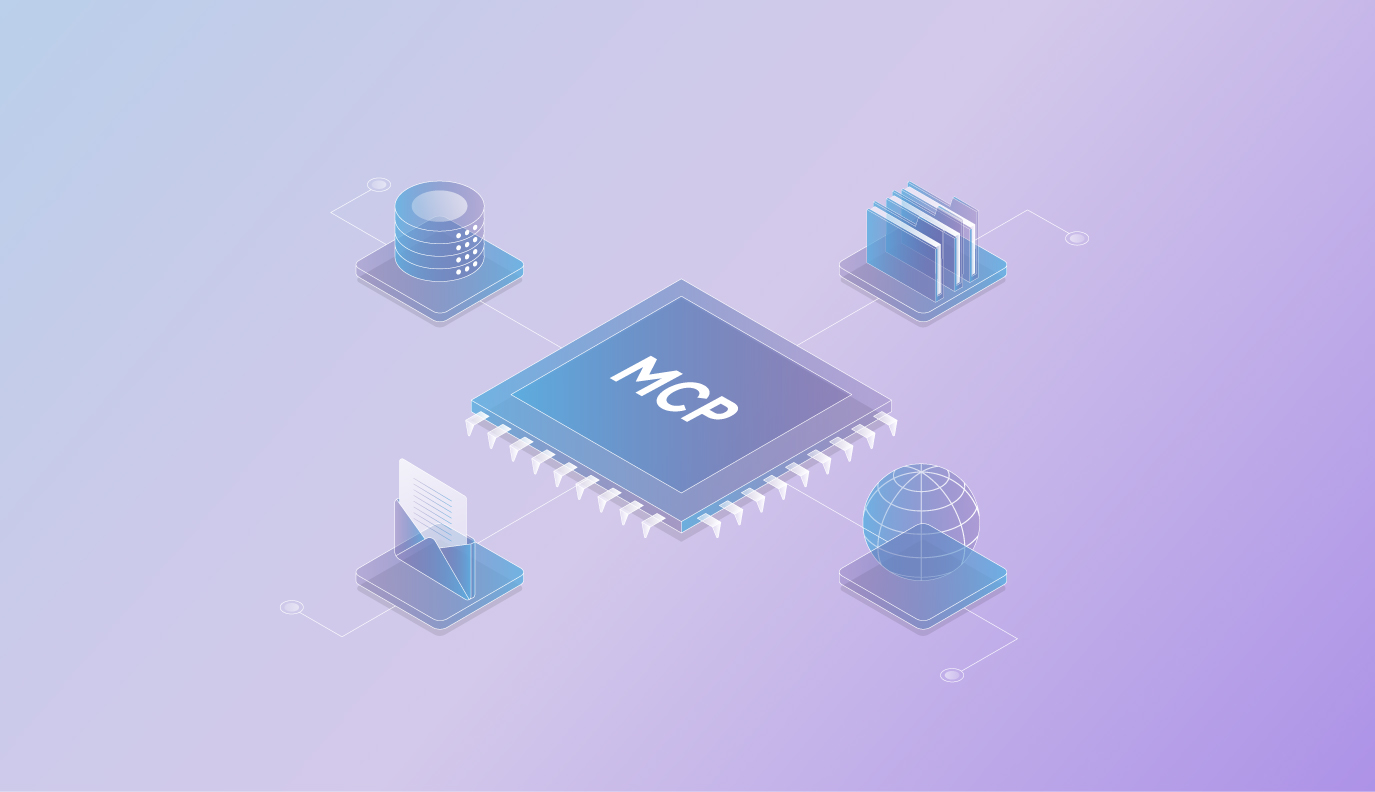
MCP breaks the connection into three components:
The host controls what the model can see. The server controls what the tool exposes. The client is just the wire between them.
This separation matters because it means you can add new tools without touching the model, and upgrade the model without rewriting your tool integrations. The pieces stay independent.
Say you’re building a developer assistant. It can already write code, explain errors, and suggest fixes. But you want it to go further: read files from your repo, open GitHub issues, check CI status, and leave comments on pull requests.
Without MCP, you’d write custom logic for each of those operations. With MCP, each capability is a separate MCP server. The GitHub server handles issues and PRs. A filesystem server handles file reads. A CI server handles build status.
The developer assistant (the MCP host) connects to all of them. When a developer asks, “What’s failing in my latest build?” the model doesn’t guess. It calls the CI server, retrieves the actual status, and returns the real data.
The whole thing is composable. Add a new tool? Stand up a new MCP server. The assistant automatically picks it up, with no retraining required.
MCP works well when you have distinct tools that the model needs to reach dynamically. It’s not the right choice for every situation.
If your AI workflow is a fixed pipeline with no real tool selection happening, the overhead of running MCP servers probably isn’t worth it. Simple RAG setups often don’t need a full protocol layer. And because MCP is still relatively new, the ecosystem of pre-built servers is growing, but not exhaustive. You’ll likely write custom servers for proprietary internal tools for the foreseeable future.
The protocol solves integration complexity. But it doesn’t remove the need for good engineering judgment about when that complexity is actually the bottleneck.
Here’s what gets underestimated: running agentic systems with MCP isn’t just a software problem. The model doesn’t call one tool and stop. In real workflows, it calls several tools, processes the results, decides what to do next, and then calls more tools. That back-and-forth adds up fast.
Latency compounds across each tool call. Memory pressure builds as context grows. And unlike a single inference request, agentic loops don’t finish in 200 milliseconds. They run for seconds, sometimes minutes, with unpredictable compute patterns.
That’s a very different workload than serving a chatbot. It needs GPU infrastructure that can hold long-running sessions without pausing, handle bursty parallel requests, and keep context accessible without slow storage offloads. This is exactly the gap Neysa’s Velocis platform is designed to solve. Dedicated GPU clusters, optimized CNI Kubernetes networking, low-latency memory architecture, and no shared-pool contention mean agentic sessions complete without the bottlenecks that tend to plague shared infrastructure under load.
MCP is part of a broader shift in how AI systems are designed. The original model was simple: the user sends a message, and the model generates a response. What’s emerging now looks more like how software has always worked. An AI that can read, write, call APIs, and trigger actions in the world.
MCP standardizes a critical piece of that, especially for teams building agentic workflows on top of production inference endpoints. It doesn’t solve agentic AI on its own. But it gives builders a common foundation, which means less time reinventing plumbing and more time building things that actually matter.
The models were ready. The tooling is catching up.
Deploy, run, train, fine-tune and serve all open-source models. Scale with confidence.

AI inference costs continue to rise despite decreasing token prices. The MI350X chip reduces these costs by optimizing memory use and model precision, allowing efficient processing. Neysa Velocis enhances the MI350X with a full support stack, ensuring reliable and predictable performance. This system has resulted in significant cost reductions for various companies.




 Back to blog home